
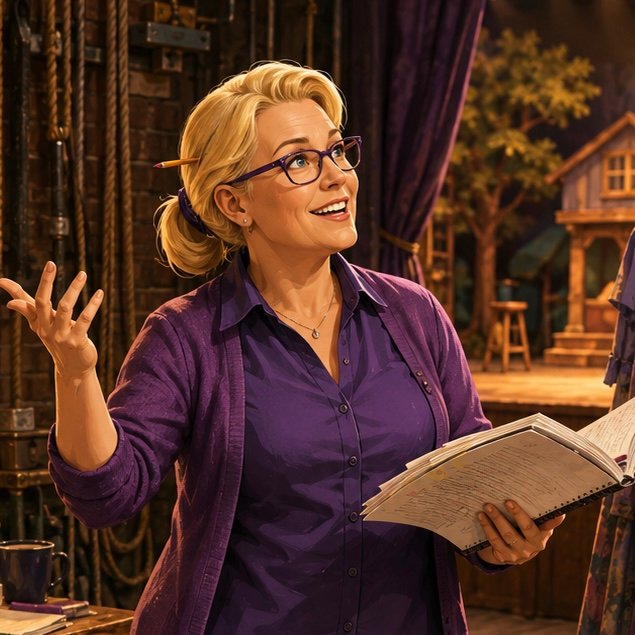

Michelle Hawk lived her life with the kind of brightness that made people lean in when she entered a room. Before her death, she worked as an actress — not the celebrity kind, but the community‑anchoring kind: local theater, holiday productions, school plays, and any stage that needed someone who could make an audience feel something. She had a gift for accents, improvisation, and turning even a simple line into a moment worth remembering.
Michelle met Michael Hawk in her early twenties, and together they built a home full of noise, creativity, and warmth. Their sons, James and Hayden, inherited her expressive spark — James through performance and humor, Hayden through quiet observation and emotional depth. Michelle encouraged both boys to see the world as a stage full of possibility.
When the Hawk family moved into the Huamán neighborhood, Michelle became fast friends with Carolina Pérez Apaza. Their friendship was effortless: shared meals, shared childcare, shared laughter. Michelle was the kind of neighbor who showed up with soup, stayed to help fold laundry, and left with a new story to tell. She and Carolina bonded over motherhood, culture, and the chaos of raising children who were always one idea away from trouble.
Patch — the scrappy dachshund who drifted between the Huamáns and Hawks — adored Michelle. She often fed him bits of dinner while practicing accents, and Patch would “sing” along in a way she found both charming and exasperating. She cast him in one of her holiday plays as the Ghost of Christmas Treats, a role he performed with chaotic enthusiasm ().
Michelle’s death, along with Michael’s, left a quiet ache in both families. Her absence is felt in the empty chair at the dinner table, the silence where her laughter used to echo, and the way James and Hayden still carry pieces of her in how they speak, act, and dream. Carolina remembers her as a sister‑friend; the Huamáns remember her as family; Patch remembers her as someone who always had a treat and a smile.
Though gone, Michelle’s influence threads through Flyland — in her sons’ courage, in the Huamáns’ loyalty, and in the way both families still gather, still create, still love with the kind of fullness she modeled.